
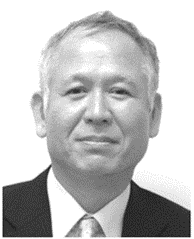
Hirofumi Akagi (Life Fellow, IEEE) received the Ph.D. degree in electrical engineering from the Tokyo Institute of Technology, Tokyo, Japan, in 1979. Since 2000, he has been a Professor, currently a Distinguished Professor, with the Tokyo Institute of Technology. Prior to it, he was with the Nagaoka University of Technology, Nagaoka, Japan, and Okayama University, Okayama, Japan.
He has authored and coauthored more than 140 IEEE Transactions/Journal papers. His research interests include power conversion systems and its applications. Akagi was the recipient of six IEEE Transactions Prize Paper Awards and 16 IEEE IAS Committee Prize Paper Awards. He was the recipient of the 2001 IEEE PELS William E. Newell Award, the 2004 IEEE IAS Outstanding Achievement Award, the 2008 IEEE Richard H. Kaufmann Award, the 2012 IEEE PES Nari Hingorani Custom Power Award, the 2018 IEEE Medal in Power Engineering, and the 2020 EPE Gaston Maggetto Medal. He served as the President of the IEEE Power Electronics Society from January 2007 to December 2008, and as the IEEE Division II Director from January 2015 to December 2016.
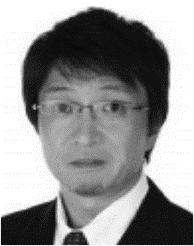
Kan Akatsu received B.S., M.S., and Ph.D. degrees in electrical engineering from Yokohama National University, Yokohama, Japan, in 1995, 1997, 2000 respectively. He joined Nissan Research Center, Yokosuka, Japan, in 2000, he contributed to the design and analysis of the new concept permanent magnet machines.
In 2003, he joined the department of Electrical and Electric Engineering at Tokyo University of Agriculture and Technology, Tokyo, Japan, as an assistant professor.
From 2005 to 2007, he was a JSPS Postdoctoral Fellowship for Research Abroad, visiting professor in WEMPEC (Wisconsin Electric Machines and Power Electronics Consortium), University of Wisconsin-Madison. From 2009, he was an associate professor in Shibaura Institute of Technology, Tokyo, Japan. From 2015, he was a profess in Shibaura Institute of Technology, Tokyo, Japan. From 2019, he is a professor in Yokohama National University, Yokohama, Japan. His research interests are motor control, motor design and inverter control.
Dr. Akatsu is a member of the IEEE PELS, IAS, IE and IEE of Japan.

Tamara Baksht is the Founder and CEO at VisIC Technologies.
Her background education and work experience are from Tomsk State University in Russia with a Ph.D. in Electrical Engineering from Tel Aviv University and further work at Gal El (MMIC).
Tamara has 8 years of experience running multi-disciplinary GaN projects, defining work plans, budgeting, reporting, transferring products to production and providing customer support. Tamara received grants from the Chief Science Office, MAFAT, and BIRD Foundation. The last major pre-VisIC achievement was the completion of Phase I of a multi-million USD, multi-year GaN program in August 2009, one year ahead of the initial schedule.

Peter Barbosa (Senior Member, IEEE) received the Ph.D. degree in electrical engineering from Virginia Polytechnic Institute and State University (Virginia Tech), Blacksburg, VA, USA, in 2002. From 2001 to 2003, he was the Technical Director with the Center for Power Electronics Systems, Virginia Tech. In 2003, he was with ABB Corporate Research, Baden, Switzerland, as a Scientist, and later as the Manager of the Power Electronics and System Applications Group.
At ABB, he developed innovative multilevel power converters for high-power applications by introducing novel hybrid multilevel power conversion concepts. Since 2008, he has been with Delta Electronics, first in Taiwan developing high-efficiency telecom power supplies and heading medium-voltage drive products, and recently the Director with Milan Jovanović Power Electronics Laboratory, Research Triangle Park, USA.

Pavol Bauer is currently a full Professor with the Department of Electrical Sustainable Energy of Delft University of Technology and head of DC Systems, Energy Conversion and Storage group. He received Masters in Electrical Engineering at the Technical University of Kosice (‘85), Ph.D. from Delft University of Technology (’95) and title prof. from the president of Czech Republic at the Brno University of Technology (2008) and Delft University of Technology (2016). He is also honorary professor at Politechnica University Timisioira in Romania. From 2002 to 2003 he was working partially at KEMA (DNV GL, Arnhem) on different projects related to power electronics applications in power systems. He published over 110 journal and over 400 conference papers in his field (with H factor Google scholar 38, Web of Science 25), he is an author or co-author of 8 books, holds 5 international patents and organized several tutorials at the international conferences.
He has worked on many projects for industry concerning wind and wave energy, power electronic applications for power systems such as Smarttrafo; HVDC systems, projects for smart cities such as PV charging of electric vehicles, PV and storage integration, contactless charging; and he participated in several Leonardo da Vinci, H2020 and Electric Mobility Europe EU projects as project partner (ELINA, INETELE, E-Pragmatic, Micact, Trolly 2.0, OSCD) and coordinator (PEMCWebLab.com-Edipe, SustEner, Eranet DCMICRO).
He is a Senior Member of the IEEE (’97), former chairman of Benelux IEEE Joint Industry Applications Society, Power Electronics and Power Engineering Society chapter, chairman of the Power Electronics and Motion Control (PEMC) council, member of the Executive Committee of European Power Electronics Association (EPE) and also member of international steering committee at numerous conferences.

Mohamed Belkhayat received the Ph.D. degree in energy systems from the Department of Electrical Engineering (EE), Purdue University, West Lafayette, IN, USA, in 1997. He is currently a Senior Research Engineer with Huntington Ingalls Industries Newport News Shipbuilding, Newport News, VA, USA, serving as a power and energy subject matter expert. He has been working in the field for more than 30 years. He has published numerous articles on the stability of integrated dc and ac power systems. He also holds several patents in the field.
His research spans a wide range of energy sources, including nuclear, hydrocarbon, wind, solar, and sea waves. He also researched various conversion processes, including thermo-photovoltaics, high-voltage power electronics, and rotating machinery. He taught for more than ten years, energy conversion, controls, and modeling and simulation at the Naval Post Graduate School in Monterey, CA, at Qatar University, Doha, Qatar, and at George Washington University, Washington, DC, USA, where he is currently an Adjunct Professor. He works in the Washington.

Vladimir Blasko (Member of US National Academy of Engineering, IEEE fellow) Dr. Blasko’s primary research interests include power electronics, modern AC drives, distributed energy systems, intelligent power management and applied modern control theory and technology. At the beginning of his career he worked for the Research Institute of the Koncar Company, in Zagreb, Croatia, before joining Rockwell Automation-The Allen Bradley Company in Milwaukee, Wisconsin.
At the Otis Elevator Company, he initiated and led the development of a new generation of high-performance regenerative drives. He then became a senior fellow at the United Technologies Research Center, setting the research direction, strategies and roadmaps for the center as well as setting up research collaborations with universities and other organizations. Currently, he is a senior manager for the Sikorsky Aircraft Corporation, a Lockheed Martin Company, based in Stratford, Connecticut. Dr. Blasko is a member of the U.S. National Academy of Engineering for his contributions to the theory and practice of regenerative electrical drives and grid-tied converters.

Dushan Boroyevich (Member of US National Academy of Engineering, IEEE life fellow) received the Dipl. Ing. degree from the University of Belgrade, Belgrade, Serbia, in 1976, the M.S. degree from the University of Novi Sad, Novi Sad, Serbia, in 1982, and the Ph.D. degree from Virginia Polytechnic Institute and State University (Virginia Tech), Blacksburg, VA, USA, in 1986.
From 1986 to 1990, he was an Assistant Professor and the Director of the Power and Industrial Electronics Research Program, Institute for Power and Electronic Engineering, University of Novi Sad. Then, he was an Associate Professor with the Bradley Department of Electrical and Computer Engineering, Virginia Tech, where he is currently the University Distinguished Professor with the Department and the Deputy Director with the Center for Power Electronics Systems.
His research interests include electronic power distribution systems, multiphase power conversion, power electronics systems modeling and control, and integrated design of power converters. He was the President of the IEEE Power Electronics Society for 20112012. He is a Member of the U.S. National Academy of Engineering. He was the recipient of four honorary professorships and numerous other awards, including the IEEE William E. Newell Power Electronics Technical Field Award and European Power Electronics Association (EPE) Outstanding Achievement Award.

Rolando Burgos received the B.S. degree in electronics engineering, the Electronics Engineering Professional degree, and the M.S. and Ph.D. degrees in electrical engineering from the University of Concepción, Chile, in 1995, 1997, 1999, and 2002, respectively. In 2002, he joined the Center for Power Electronics Systems (CPES), Virginia Tech, Blacksburg, VA, USA, as a Post-Doctoral Fellow, becoming a Research Scientist in 2003, and a Research Assistant Professor in 2005.
In 2009, he joined ABB Corporate Research, Raleigh, NC, USA, where he was a Scientist from 2009 to 2010, and a Principal Scientist from 2010 to 2012. In 2010, he was appointed an Adjunct Associate Professor with the Electrical and Computer Engineering Department, Future Renewable Electric Energy Delivery and Management (FREEDM) Systems Center, North Carolina State University, Raleigh, NC.
In 2012, he returned to Virginia Tech, as an Associate Professor with The Bradley Department of Electrical and Computer Engineering, where he earned his tenure in 2017, was promoted to a Professor in 2019. Since 2021, he has been the Director of CPES. His research interests include high-power density wide bandgap semiconductor-based power conversion–low-voltage and medium-voltage applications, packaging and integration, electromagnetic interference (EMI) and electromagnetic compatibility (EMC), multiphase multilevel power converters, modeling and control, grid power electronics systems, and the stability of ac and dc power systems.
Dr. Burgos is a member of the IEEE Power Electronics Society where he currently serves as an Associate Editor for the IEEE Transactions on Power Electronics and the IEEE Journal of Emerging and Selected Topics in Power Electronics. He is also a member of the IEEE Industry Applications Society, the IEEE Industrial Electronics Society, and the IEEE Power and Energy Society. He is the past Chair of the Technical Committee on Power and Control Core Technologies.

Stephanie Watts Butler, Ph.D., P.E., is the President of WattsButler LLC, an innovation services company focused on the power semiconductor industry. During her previous career at Texas Instruments, she produced innovations in the areas of power and CMOS process and package technology, processing equipment, materials, reliability, research and development management, manufacturing science, control, fault detection, metrology, and new product development generating 17 U.S. patents.
She is the Co- Founder and the Past-Chair of JEDEC’s JC-70 Wide Bandgap Standards Committee, the Co-Convenor of IEC’s TC47/ WG8. She is the Industry Deputy Editor-in-Chief of IEEE Power Electronics Magazine, a PELS Member-at-Large (ADCOM), the Chair of the PELS Industry Committee, and a WIE Committee Member. She also serves on the APEC Planning Committee and the PSMA Semiconductor Committee.

Kirk W. Cameron, Ph.D. is a Professor of Computer Science at Virginia Tech and an IEEE Fellow. As of August 2021, he is the inaugural faculty lead (i.e., department head) at Virginia Tech’s Innovation Campus. From 2012-2022, he was Director of the stack@cs Center for Computer Systems (recently ranked #26 by US News). He is a Distinguished Member of the ACM; and an associate editor for the Journal of Parallel and Distributed Computing and for IEEE Transactions on Parallel and Distributed Computing. From 2018-2022 he was Associate Department Head for Research and Engagement.
He was Associate Department Head and Graduate Program Director from 2014-2017. From 2017-2018, Prof. Cameron held a Distinguished Visiting Fellowship at Queen’s University Belfast from the U.K. Royal Academy of Engineering.
The central theme of his research is to improve power and performance efficiency in high performance computing (HPC) systems and applications. Accolades for his work include NSF and DOE Career Awards, IBM and AMD Faculty Awards, and being named Innovator of the Week by Bloomberg Businessweek Magazine. He pioneered Green Computing (Green500, SPECPower, PowerPack, grano.la) and his power measurement and management software has been downloaded by more than 500,000 people in 160+ countries. He is a recipient of the HPDC 2017 Best Paper Award and his educational SeeMore kinetic cluster was named the second best RaspberryPi project of all time by MagPi Magazine. His work consistently appears in The New York Times, The Guardian, Time, Newsweek, etc. His educational LACE kinetic sculpture (pictured above) recently appeared at the Smithsonian National Museum of American History in Washington, D.C.
Jimmy Chiang is a Vice President at AcBel Polytech, which is a Computer Equipment & Peripherals company with an estimated 8,342 employees; and founded in 1981.The Company’s products include personal computer (PC) power supplies, web server power supplies, telecom power supplies, low voltage switching regulators, and direct current (DC)/DC converters.

José Antonio Cobos received his Electrical Engineering and Doctoral degrees from UPM, in 1989 and 1994, respectively. He is a Full Professor at the Technical University of Madrid (UPM), Madrid, Spain since 2001. His contributions are focused in the field of power supply systems for telecom, aerospace, industrial, automotive and medical applications. His research interests include energy efficiency in digital circuits and RF amplifiers, magnetic components, piezoelectric transformers, transcutaneous energy transfer, and dynamic power management. He published more than 300 technical papers (h-index 38), and holds nine patents. He advised 13 Doctoral dissertations and more than 40 Master Thesis.
He was the Director of the “Centro de Electrónica Industrial, CEI-UPM” (2006–2007 and 2011–2015), a university research center, leading a strong industrial program in power electronics, with technology transfer through direct R&D contracts with more than 30 different companies in Europe, U.S., Australia, and China. At ETSII-UPM, he was the Vice-Dean for Academic Affairs, the Vice-Dean for Research & Doctorate, and the President of the Alumni Association.,Dr. Cobos received some awards which include Semikron Innovation Award for the teamwork on “RF Power Amplifier with Increased Efficiency and Bandwidth,” the Google “Little Box Challenge” Award to develop the smallest possible inverter for PV panels and high density batteries, and in 2000, the “Richard Bass Outstanding Young Power Electronics Award of the IEEE.”
He has been cooperating with the IEEE and other professional associations (Technical Committee Chair, Associate Editor, and Adcom member). He is a Member of the Steering committee of IEEE-APEC (Expo Chair) and the General Chair for the PwrSoC 2016.
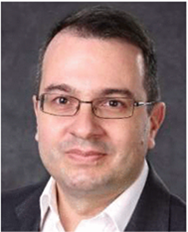
Igor Cvetkovic (Member, IEEE) received the Dipl. Ing. degree from the University of Belgrade, Belgrade, Serbia, in 2004, and the M.S. and Ph.D. degrees from Virginia Polytechnic Institute and State University (Virginia Tech), Blacksburg, VA, USA, in 2010 and 2017, respectively. From 2004 to 2007, he was an Engineer with the Electric Power Industry of Serbia, Belgrade, Serbia.
From 2010 to 2022, he progressed from Research Engineer to Research Scientist and then became a Technical Director with the Center of Power Electronics Systems, Virginia Tech. He has sinced joined Booz Allen Hamilton as a lead engineer serving as Science and Engineering Technical Advisor to ARPA-E.
His research interests include AC- and DC-electronic power distribution systems design, modeling, and control, system-level dynamic interactions, on-line stability monitoring, black-box low-frequency terminal behavioral modeling of converters and systems, and power electronics converters electro-thermo-mechanical design and integration. He became a Member of the Medium-Voltage DC Distribution Systems Working Group, CIGRE.

Rik W. DeDoncker received the Ph.D. degree in electrical engineering from the Katholieke Universiteit Leuven, Leuven, Belgium, in 1986. In 1987, he was appointed as a Visiting Associate Professor with the University of Wisconsin, Madison, Madison, WI, USA. After a short stay as an Adjunct Researcher with Interuniversity Microelectronics Centre, Leuven, he joined, in 1989, the Corporate Research and Development Center, General Electric Company, Schenectady, NY, USA. In 1994, he joined Silicon Power Corporation, a former division of General Electric Inc., as the Vice President of Technology. In 1996, he became a Professor with RWTH Aachen University, Aachen, Germany, where he currently leads the Institute for Power Electronics and Electrical Drives. Since 2006, he has been the Director of the E.ON Energy Research Center, RWTH Aachen University. Dr. DeDoncker was the President of the IEEE Power Electronics Society (PELS) in 2005 and 2006. He was the Founding Chairman of the German IEEE Industry Applications Society PELS Joint Chapter. He was the recipient of the IEEE IAS Outstanding Achievement Award in 2002, IEEE PES Nari Hingorani Custom Power Award in 2008, IEEE William E. Newell Power Electronics Award in 2013, and honorary doctoral degree of TU Riga, Latvia, in 2010. In 2009, he led a VDE/ETG Task Force on Electric Vehicles.

Christina DiMarino is an assistant professor in the Electrical and Computer Engineering Department at Virginia Tech and faculty in the Center for Power Electronics Systems (CPES). She received her M.S. and Ph.D. degrees in electrical engineering from Virginia Tech in 2014 and 2018, respectively.
Her research interests include power electronics packaging and high-density integration of wide-bandgap power semiconductors. She has received five best paper and presentation awards at international conferences and was awarded the Outstanding New Assistant Professor Award at Virginia Tech in 2022.
She is a Member-at-Large for the IEEE Power Electronics Society (PELS), Chair for the PELS Technical Committee 2 on Power Components, Integration, and Power ICs, an Associate Editor for the IEEE Transactions on Power Electronics, and is a member of the PELS Women in Engineering (WIE) Committee. She has also served on the technical committees for several IEEE conferences.
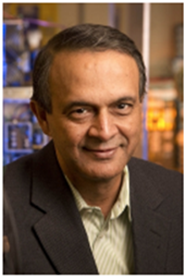
Deepak Divan is Professor, John E Pippin Chair, GRA Eminent Scholar, and Director of the Center for Distributed Energy at the Georgia Institute of Technology in Atlanta, GA. His field of research is in the areas of power electronics, power systems, smart grids, and distributed control of power systems. He works closely with utilities, industry and is actively involved in research, teaching, entrepreneurship and starting new ventures.
Dr. Divan also serves as Founder and Chief Scientist at Varentec, in Santa Clara, CA, and was President and CTO from 2011-14, leading the company as it developed its suite of innovative distributed real-time grid control technologies. Varentec is funded by leading green-tech Venture Capital firm Khosla Ventures and renowned investor Bill Gates.
Dr. Divan is an elected Member of the US National Academy of Engineering, member of the National Academies Board on Energy and Environmental Systems, a Fellow of the IEEE, past President of the IEEE Power Electronics Society, and is a recipient of the IEEE William E Newell Field Medal. He has 40 years of academic and industrial experience, 65 issued and pending patents, and over 400 refereed publications.
He has founded or seeded several new ventures including Soft Switching Technologies, Innovolt, Varentec and Smart Wires, which together have raised >$160M in venture funding. He received his B. Tech from IIT Kanpur, and his M.S. and Ph.D. degrees from the University of Calgary, Canada.

Dong Dong received the B.S. degree from Tsinghua University, Beijing, China, in 2007, and the M.S. and Ph.D. degrees in electrical engineering from Virginia Tech, Blacksburg, VA, USA, in 2009 and 2012, respectively. From 2012 to 2018, he was an Electrical Engineer with GE Global Research Center, Niskayuna, NY, USA. At GE, he participated in and led multiple technology programs, including MV/HVDC power distribution and power delivery, SiC high-frequency high-power conversion systems, solid-state transformers, and energy storage system.
Since 2018, he has been with the Bradley Department of Electrical and Computer Engineering, Virginia Tech. He has authored or coauthored more than 30 referred journal publications and more than 80 IEEE conference publications. He currently holds 30 granted U.S. patents. His research interests include wide-band-gap power semiconductor-based high frequency power conversion, soft-switching and resonant converters, high-frequency transformers, and MV and HV power conversion system for grid, renewable, and transportation applications. He is currently an Associate Editor for the IEEE Transactions on Power Electronics.
He was the recipient of the GE gold Medallion Patent Award and GE technology transition awards. He was also the recipient of the two Prize Paper Awards from the IEEE Transactions on Power Electronics and IEEE Transactions on Industry Applications, William Portnoy Prize Paper Award from IEEE IAS, and NSF CAREER Award. He was the Vice Chair of IEEE Industry Application Society Schenectady Region Chapter in 2017 and General Chair of IEEE International Conference on DC Microgrids in 2021.

Boran Fan received the B.S. and Ph.D. degrees in electrical engineering from Tsinghua University, Beijing, China, in 2013 and 2018, respectively. In 2018, he joined the Center for Power Electronics Systems, Virginia Tech, Blacksburg, VA, USA, as a Postdoctoral Fellow and became a Research Scientist in 2021.
His research interests include topology and control of multilevel power converters, renewable energy generation, wide-bandgap semiconductor applications, electromagnetic interference, and electromagnetic compatibility.

Tsuyoshi Funaki, Professor at Osaka University, Graduate school of Engineering, Division of Electrical, Electronic and Infocommunications Engineering.
He is a principle investigator (PI) of Power System Laboratory in Division of Electrical, Electronic and Information Engineering, Graduate School of Engineering in Osaka University. He is currently working on the research and development of renewable energy system and smart grid technology based on power electronics using incoming wide band gap semiconductor power devices; e.g. SiC, GaN, and also working on reliability assessment of power supply facilities.
He received the B.E. and M.E. degrees in electrical engineering and the Ph.D. degree all from Osaka University, Osaka, Japan. He was on the staff of Research Associate with Osaka University in 1994, and promoted to Associate Professor in 2001. In 2002, he was an Associate Professor with Kyoto University.
Now, he has been a full Professor with Osaka University since 2008.

Dennis Grove has more than 25 years of experience of program, financial, research, and administrative management at leading academic and research organizations including US Department of Energy’s Ames National Laboratory,
Yale University’s School of Medicine and School of Forestry and Environmental Sciences, and Virginia Tech.
He currently serves as the Industry Program Director for CPES. Dennis earned an MS in Organic Chemistry and an MBA from Iowa State University.

Thomas Harder received the diploma degree in physics from the University of Kiel, Kiel, Germany. He has more than 15 years of experience in packaging and interconnection technologies for microsystems and multichip modules.
He was a Researcher in the Fraunhofer Institute for Silicon Technology (ISIT), Itzehoe, Germany. Since 2003, he has been the General Manager of European Center for Power Electronics, an industry-driven research network, Nuremberg, Germany.

Shiori Idaka joined Mitsubishi Electric’s Advanced Technology R&D Centre in 2002. There, she was involved in the development of various semiconductor packages, including LSIs, MEMS sensors, high-frequency and optical devices, power devices.
In December 2016, she moved to the German branch of Mitsubishi Electric Europe B.V. and launched the European Research Cooperation Centre in 2017, where she is responsible for the coordinating of research and development projects on power electronics. She is also a member of the Department of Electrical Engineering at Nagoya University since 2014.

Sungmin Kim received the B.S., M.S., and Ph.D. degrees in electrical engineering from Seoul National University, Korea, in 2003, 2009, and 2014 respectively. From 2012 to 2013, he was a Visiting Scholar with the FREEDM Systems Center, North Carolina State University, USA. From 2014 to 2015, he was a Senior Engineer at the Samsung Electronics Company, Korea.
Since 2015, he has been with Hanyang University ERICA Campus, where he is presently working as Associate Professor in the School of Electrical Engineering. His current research interests include power converter circuits design and control, high performance machine drive system, and medium/high voltage DC Grid.
Isik C. Kizilyalli currently serves as the Associate Director for Technology at the Advanced Research Projects Agency – Energy (ARPA-E). In this role, Dr. Kizilyalli supports the Deputy Director for Technology in oversight of all technology issues relating to ARPA-E’s programs as well as assisting with program development, Program Director and Fellow recruitment, and coordinating project management across the Agency.
Kizilyalli’s focus at ARPA-E includes power electronics, wide bandgap semiconductors, electronic systems for hostile environments, electrification of transport (aviation, ships, automotive), subsurface instrumentation, novel drilling concepts, medium voltage DC distribution grids, and grid resiliency against EMP and space weather threats. Prior to joining ARPA-E, Kizilyalli served as founder, Chief Executive Officer, and Chief Technical Officer of Avogy Inc., a venture backed start-up focused on bulk GaN based vertical power semiconductor technologies and power electronics. Previously, he was with Bell Laboratories, followed by Nitronex Corporation, and solar PV startup Alta Devices where his team holds the world record for single junction solar cell conversion efficiency.
Kizilyalli was elected a Fellow of the Institute of Electrical and Electronics Engineers (IEEE) in 2007 for his contributions to Integrated Circuit Technology. He also received the Bell Laboratories’ Distinguished Member of Technical Staff award and the Best Paper Award at the International Symposium on Power Semiconductors and Integrated Circuits in 2013. Kizilyalli holds his B.S. in Electrical Engineering, M.S. in Metallurgy, and Ph.D. in Electrical Engineering from the University of Illinois Urbana-Champaign. He has published more than 100 papers and holds 120 issued U.S. patents.
Johann W. Kolar (Fellow, IEEE) is an International Member of the U.S. National Academy of Engineering and a Full Professor and the Head of the Power Electronic Systems Laboratory at the Swiss Federal Institute of Technology (ETH) Zurich.
The focus of his current research is on ultra-compact/efficient WBG PFC rectifier and inverter systems, ultra-high bandwidth switch-mode power amplifiers, multi-port converters, solid-state transformers, multi-functional actuators, ultra-high speed/motor-integrated drives, bearingless motors, ANN-based multi-objective design optimization, and life cycle analysis of power electronics converter systems.
Fred C. Lee (Life Fellow, IEEE) received the B.S. degree from National Cheng Kung University, Tainan City, Taiwan, in 1968, and the M.S. and Ph.D. degrees from Duke University, Durham, NC, USA, in 1972 and 1974, respectively, all in electrical engineering. He is a University Distinguished Professor Emeritus with Virginia Polytechnic Institute and State University (Virginia Tech), Blacksburg, VA, USA, and the Founder and Director Emeritus of the Center for Power Electronics Systems, an engineering research center consisting of 80 corporations. The mission of the center is “to provide leadership through global collaboration to create electric power processing systems of the highest value to society.” His research interests include high-frequency power conversion, magnetics and EMI, distributed power systems, renewable energy, power quality, high-density electronics packaging and integration, and modeling and control. He holds 105 U.S. patents, and has authored or coauthored more than 335 journal articles and more than 780 refereed technical papers. During his tenure with Virginia Tech, he has supervised to completion 88 Ph.D. and 93 master’s students.
Dr. Lee was the President of the IEEE Power Electronics Society (1992–1994) and is a recipient of the William E. Newell Power Electronics Award in 1989; PCIM Award for Leadership in Power Electronics Education presented at HFPC in 1990; the Arthur E. Fury Award for Leadership and Innovation in1998; the Honorary Sun Yuen Chuan Chair Professor of National Tsing Hua University in Taiwan in 2001; the Ernst-Blickle Award sponsored by SEW-EURODRIVE Foundation in 2005; the Distinguished Alumni Award from National Cheng Kung University in 2006; the Honorary Li Kwoh-Ting Chair Professor of National Cheng Kung University in 2011; Inaugural Member of the Virginia Tech Entrepreneur Hall of Fame in 2012; Honorary Chair Professor of National Chiao Tung University in Taiwan in 2014; Honorary Chair Professor of Tsinghua University in China in 2017; and Honorary Professor of Huazhong University of Science and Technology in China in 2018.
He is a member of the U.S. National Academy of Engineering, an Academician of the Academia Sinica in Taiwan, and a Foreign Member of the Chinese Academy of Engineering in the People’s Republic of China. He is also a recipient of the IEEE Medal in Power Engineering in 2015 “for contributions to power electronics, especially high-frequency power conversion,” and the Power Supply Technology Outstanding Achievement Award from China Power Supply Society (CPSS) in 2017. He was elected as National Academy of Inventors (NAI) Fellow in 2018, and endorsed in 2019 as a Leader in engineering and education with the Albert Nelson Marquis Lifetime Achievement Award.

Jinjun Liu (Fellow, IEEE) received the B.S. and Ph.D. degrees in electrical engineering from Xi’an Jiaotong University (XJTU), Xi’an, China, in 1992 and 1997, respectively. He was a faculty with the School of Electrical Engineering, XJTU. From late 1999 to early 2002, he was with the Center for Power Electronics Systems, Virginia Polytechnic Institute and State University, Blacksburg, VA, USA, as a Visiting Scholar. In late 2002, he was a Full Professor and then the Head of the Power Electronics and Renewable Energy Center, XJTU, which now comprises more than 20 faculty members and more than 200 graduate students and carries one of the leading power electronics programs in China. From 2005 to early 2010, he was an Associate Dean with the School of Electrical Engineering, XJTU, and from 2009 to early 2015, the Dean for Undergraduate Education of XJTU. He is currently a XJTU Distinguished Professor of Power Electronics. He coauthored 3 books (including one textbook), authored and coauthored more than 500 technical papers in peer-reviewed journals and conference proceedings, holds more than 70 invention patents (China/US/Europe), and delivered for many times plenary keynote speeches and tutorials at IEEE conferences or China national conferences in power electronics area.
His research interests include modeling, control, and design methods for power converters and electronified power systems, power quality control and utility applications of power electronics, and microgrids for sustainable energy and distributed generation. Dr. Liu was the recipient of many times governmental awards at national level or provincial/ministerial level for scientific research/teaching achievements. He was also the recipient of the 2006 Delta Scholar Award, the 2014 Chang Jiang Scholar Award, the 2014 Outstanding Sci-Tech Worker of the Nation Award, the 2016 State Council Special Subsidy Award, IEEE Transactions on Power Electronics 2016 and 2021 Prize Paper Awards, the Nomination Award for the Grand Prize of 2020 Bao Steel Outstanding Teacher Award, and the 2022 Fok Ying Tung Education and Teaching Award. He was the IEEE Power Electronics Society Region 10 Liaison and then China Liaison for ten years. Since 2006, he has been an Associate Editor for the IEEE Transactions on Power Electronics, 2015–2019 Executive Vice President and 2020–2021 Vice President of IEEE Power Electronics Society.
He was on the Board of China Electrotechnical Society 2012–2020 and was elected the Vice President in 2013 and the Secretary General in 2018 of the CES Power Electronics Society. He was the Vice President for International Affairs, China Power Supply Society from 2013 to 2021, and since 2016, the inaugural Editor-in-Chief of CPSS Transactions on Power Electronics and Applications. He was elected the President of CPSS in November 2021. Since 2013, he has been the Vice Chair of the Chinese National Steering Committee for College Electric Power Engineering Programs.
Leo Lorenz was born in Haibach, Germany, in 1946. He received the Dipl.-Ing. degree from the Technical University of Berlin, Berlin, Germany, in 1976 and the Dr.-Ing. degree from the University of Federal Defence, Munich, Germany, in 1984. From 1976 to 1980, he was with AEG, R&D–Center for Power Electronics, Berlin.
In 1984, he joined Siemens Semiconductor Division which became Infineon Technologies AG, Munich, Germany, in 1999. Since then he has worked on power semiconductor and power ICs in different functions and responsibilities.
He has published over 200 technical papers in these fields. In 2001, he became a Professor for system integration at the University of Ilmenau, Ilmenau, Germany. Dr. Lorenz is President of the ECPE (European Center of Power Electronics).

H. Alan Mantooth (Fellow, IEEE) received the B.S. and M.S. degrees in electrical engineering from the University of Arkansas, Fayetteville, AR, USA, in 1985 and 1986, respectively, and the Ph.D. degree from Georgia Tech, Atlanta, GA, USA, in 1990. He then joined Analogy, a startup company in Oregon. In 1998, he joined the Faculty of the Department of Electrical Engineering, University of Arkansas, where he is currently holding the rank of Distinguished Professor. His research interests include analog and mixed-signal IC design and CAD, semiconductor device modeling, power electronics, power electronic packaging, and cybersecurity.
He established the National Center for Reliable Electric Power Transmission (NCREPT) and is currently the Executive Director. He is the Founding Director of the NSF Industry/University Cooperative Research Center on GRid-connected Advanced Power Electronic Systems (GRAPES) and the Deputy Director of the POETS NSF Engineering Research Center. He holds the 21st Century Research Leadership Chair of engineering. He is a Past-President of the IEEE Power Electronics Society and the Editor-in-Chief of the IEEE Open Journal of Power Electronics. He is a member of Tau Beta Pi, Sigma Xi, and Eta Kappa Nu, and registered professional engineer in Arkansas.
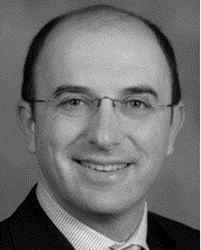
Paolo Mattavelli (Fellow, IEEE) received the M.S. (Hons.) and Ph.D. degrees in electrical engineering from the University of Padova, Padova, Italy, in 1992 and 1995, respectively. He is currently a Full Professor with the University of Padova. His current Google scholar H-index is 80. His major research interests include analysis, modeling, and analog and digital control of power converters, grid-connected converters for renewable energy systems and microgrids, and high-temperature and high-power-density power electronics.
Dr. Mattavelli was an Associate Editor for the IEEE Transactions on Power Electronics from 2003 to 2012. He is a Co-Editor-in-Chief for the IEEE Transactions on Power Electronics. From 2005 to 2010, he was the Industrial Power Converter Committee Technical Review Chair for the IEEE Transactions on Industry Applications. For terms 2003–2006, 2006–2009, and 2013–2015, he was a member-at-large of the IEEE Power Electronics Society’s Administrative Committee.
He was a recipient of the Prize Paper Award in the IEEE Transactions on Power Electronics in 2005, 2006, 2011, and 2012, and the 2nd Prize Paper Award at the IEEE Industry Applications Society Annual Meeting in 2007.

Jan Michalik | Vice-dean for International Relations and Communication Faculty of Electrical Engineering
Research activities of Dr. Michalik concern power electronics converters control, mainly current-source based, control algorithms development and microprocessor based control systems. In recent time, Dr. Michalik focused his research mainly on predictive control theory applied to current-source converters. In selection, in 2007, he was an invited lecturer at the University of Vigo, Spain, where he made lectures introducing Control structures of single phase current–source rectifiers.
In 2015, he was one of the senior engineers responsible for strategic transfer of technology in the field of light traction drive design to the industrial partner in China. In 2016, he was the invited speaker at ECPE workshop: Model Predictive Control in Power Electronics – Expectations and Applications.
He has received the best paper award in EDPE 2007, and the Dean of the Faculty of Electrical Engineering award in 2007. He has also been chair of sessions at EPE-PEMC 2010, IECON2015 and IECON2016, where he also obtained Best session presentation award. Dr. Michalik serves as a reviewer at several international conferences and in distinguished journals such as the IEEE Transactions on Power Electronics and also as a reviewer of national and international doctoral and Ph.D. thesis.
Dr. Michalik published 2 papers in international journals with impact factor (both of them were invited) and more than 50 papers in other national and international journals and conferences. Public scientific resources (WoS, IEEEXplore, scholar.google.com) recognize more than 220 citations to his papers and h-index 8 (Google scholar).
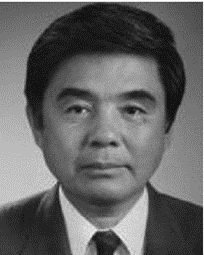
Hiromichi Ohashi received the B.S. degree from Hosei University, Tokyo, Japan, in 1964, the M.S. degree from Sophia University, Tokyo, Japan, in 1969, both in electronics, respectively, and the Ph.D. degree in electronics from Tohoku University, Sendai, Japan, in 1990. From 1969 to 2002, he joined the Corporate Research and Development Center, Toshiba Corporation. From 2003 to 2005, he was a Professor of Tokyo Institute of Technology. Since 2003, he has been an Invited Senior Research Scientist in the National Institute of Advanced Industrial Science and Technology, Tsukuba, Japan.
He has more than 100 patents and more than 100 journal and international conference publications. His current interests include advanced power devices, related materials and power electronics system integration, and network. Dr. Ohashi is a Fellow member of the IEE Japan and a Life Member of the IEEE. He was the General Chairman of the International Symposium on Power Semiconductor Devices’95. He is a recipient of the Medal with Purple Ribbon from the Japan Government for his contribution to the development of high power light triggered thyristors for power transmission network of Japan.

Zdeněk Peroutka received the master’s and Ph.D. degrees in electrical engineering from the University of West Bohemia (UWB), Pilsen, Czech Republic, in 2000 and 2004, respectively.,He is a Full Professor of Power Electronics and Drives and the Dean of the Faculty of Electrical Engineering, UWB. From October 2010 to June 2016, he was a Scientific Director and Principal Investigator with the R&D Center RICE, UWB. Since July 2016, he has been a CEO and Principal Investigator with the R&D Center RICE.
He has authored or coauthored more than 200 papers in international journals and conference proceedings. He is the Inventor of three international patents and three utility models. His main research interests include power electronics and drives for modern transport systems and power engineering.

Michael Pesin is acting Deputy Assistant Secretary for the Grid Controls and Communications Division in DOE’s Office of Electricity. His division is responsible for the development and management of projects for next-generation electricity delivery technologies and supporting activities to accelerate their introduction to the marketplace.
Mr. Pesin has over 35 years of experience in the electric utility industry directing development and execution of advanced technology programs. Mr. Pesin is a licensed professional engineer and spent most of his career leading technology organizations at electric utility companies where he led technology strategy development, managed research and development programs, and directed strategic programs and demonstration projects in generation, transmission, distribution, system protection, advanced metering infrastructure, communication networks and cybersecurity, energy storage, microgrids, electric vehicles, transactive energy, and other advanced technologies.
Prior to joining DOE, Mr. Pesin was also the founder and president of a consulting company working with electric utilities, technology companies, and investors. He served as a board member at a number of technology organizations, is actively involved with many electric power industry groups, and is a frequent speaker at industry events.

Jad Rizk, Vice President – Enterprise Power / US Design Center at Richtek.
Jad Rizk received his Ph.D. degree from the University of Michigan, Ann Arbor,
in 2003, where his research focused on MEMS circuits and antennas for W-band applications. In 2003, he joined Intel Corporation, Hillsboro, OR, where he worked on wireless circuits development and device characterization on 90 nm CMOS technology.
He was then involved in high-speed IO and LCPLL development on multiple process technologies from 65 nm to 32 nm. He is currently managing the Wireless Circuit Technology Group at Intel focusing on 22 nm and 14 nm CMOS nodes.

Sönke Rogalla received the Diplom-Ingenieur degree in electrical engineering and information technology from the Karlsruhe Institute of Technology (KIT), Karlsruhe, Germany, in 2006, and the Ph.D. degree in electrical engineering from the University of Braunschweig—Institute of Technology, Germany, in 2020. Since 2006, he has been with the Fraunhofer Institute for Solar Energy Systems, Freiburg, Germany.
He was responsible for different research groups in the fields of PV inverter development, high power electronics, inverter testing, PV system concepts, grid interaction of converters, and grid-forming converters. Since 2022, he has been the Co-Head of the Department Power Electronics and Grid Integration.

Jason Rouse is a Strategic Growth & Ventures Manager at Taiyo America (Taiyo Holdings of Japan) where he oversees venture capital investments, new business partnerships, and Tier-1/OEM interactions.
Prior to joining Taiyo, he worked at leading global materials companies including Corning, Sekisui Chemical, Wacker Chemie, and Sun Chemical/DIC. In these roles, he leads the global development and commercialization of innovative technologies for the electronics and cleantech industries.
Jason serves on the ECTC Advanced Manufacturing Technology and IMAPS Device Packaging Conference committees, and helps organize multiple PSMA events. He holds an MBA from Fordham University, a PhD from Lehigh University, and a BA from Alfred University.
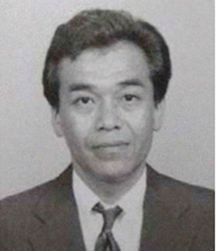
Katsumi Satoh joined Mitsubishi electric corp. in 1984. He previously worked on development of high power semiconductor such as a high voltage thyristor, a light triggered thyristor, GTO and GCT for high power transmission system in Mitsubishi Electric Corporation.
His current research interests include power device chips technology and packaging technology for power modules. He received Doctor of Engineering degree from Kyusyu University, Japan in 2000. He received First Prize Paper Award from IEEE in 2001.
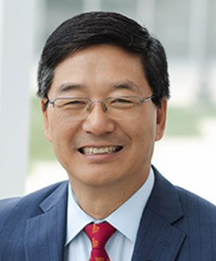
Daniel “Dan” Sui, an internationally renowned geographer/GIScientist with research interests focusing on GIS-based spatial analysis and modeling for urban, environmental, and public health applications, was appointed Virginia Tech’s vice president for research and innovation in the fall of 2020.
An established researcher and invited public speaker, Sui has published more than 230 scholarly publications covering various interdisciplinary topics and delivered approximately 70 keynote speeches, endowed, or invited guest lectures over the past five years.
Leading the Office of Research and Innovation, Sui reports to Executive Vice President and Provost Cyril Clarke. He is also a member of the president’s cabinet and council. Also, as chief research and innovation officer, Sui is responsible for supporting and growing Virginia Tech’s research portfolio and chairs the board of Virginia Tech Intellectual Properties.

Makoto Takamiya (S’98-M’00-SM’14) received the B.S., M.S., and Ph.D. degrees in electronic engineering from the University of Tokyo, Japan, in 1995, 1997, and 2000, respectively. In 2000, he joined NEC Corporation, Japan, where he was engaged in the circuit design of high-speed digital LSI’s. He joined University of Tokyo, Japan in 2005, where he is now a Professor of Institute of Industrial Science. From 2013 to 2014, he stayed at University of California, Berkeley as a visiting scholar.
His research interests include the digital gate driver and sensor ICs for power electronics and the integrated power management circuits for automotive and industrial applications. He is a member of the technical program committee of IEEE Symposium on VLSI Circuits and IEEE Asian Solid-State Circuits Conference. He formerly served on the technical program committees of IEEE International Solid-State Circuits Conference (ISSCC) from 2015 to 2020 and IEEE Custom Integrated Circuits Conference from 2006 to 2011.
He was a Far East Regional Chair in ISSCC 2020. He was a Distinguished Lecturer of IEEE Solid-State Circuits Society from 2019 to 2020. He received 2009 and 2010 IEEE Paul Rappaport Awards and the best paper award in 2013 IEEE Wireless Power Transfer Conference.
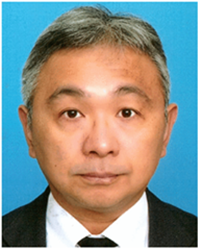
Keiji Wada (Senior Member, IEEE) received the Ph.D. degree in electrical engineering from Okayama University, Okayama, Japan, in 2000. From 2000 to 2006, he was an Assistant Professor with Tokyo Metropolitan University and the Tokyo Institute of Technology.
He became an Associate Professor in 2006 and a Professor in 2021 with Tokyo Metropolitan University. His current research interests include gate-drive circuits, electromagnetic interference filters, and a power converter circuit. Prof. Wada is a Senior Member of IEEJ.

Rudy Wang | Sr. Member of the R&D Staff
Rudy Wang received the B.S. and M.S. degrees in electrical engineering from Xi’an Jiaotong University, Xi’an, China, and the Ph.D. degree from the Center for Power Electronics Systems (CPES), Virginia Tech, Blacksburg, VA, USA, in 2004, 2007, and 2012, respectively.
After graduation, he joined the General Electric company first at GE Global Research and then at GE Aviation. He was senior staff engineer and project leader on projects including electrification in transportation, healthcare electronics, renewable energy, industrial solutions, etc. In 2020, he joined the Milan M. Jovanovic Power Electronics Lab of Delta Electronics (Americas) Ltd. He received the third and second place William M. Portnoy Award for the Best Paper published in the IEEE Energy Conversion Congress and Exposition (ECCE) in 2012 and 2018. He also received the GE Gold Medal Inventor award in 2019. Since 2015, he has been an Associate Editor of the IEEE Transaction on Industrial Applications. From 2015 to 2019, he was the Chair of the Power Electronics Devices and Components Committee in IEEE Industry Applications Society.
He has published more than 50 papers in refereed journals and international conference proceedings and more than 25 awarded or pending US patents. His research and development interests include electric circuit and topologies, wide-band gap device-based converter design, high power density and harsh environment power electronics, electromagnetic interference technology, etc. His current focus in Delta is in medium voltage fast EV charging and other relevant applications.

Ahmed Yago is an electrical engineer II with Crane Aerospace and Electronics in Fort Walton Beach, Florida. Previously he has worked as product electrical engineer II with BorgWarner. He received his Master’s degree in Electrical and Computer Engineering with primary focus on Power Electronics and Control System, his Bachelor’s degree is in electrical and computer Engineering from Purdue University, IUPUI campus, respectively 2021 and 2019.
He is currently on pursuing a PhD in Power Electronics with research primarily focused on High power, and covers the following; performing design and development of power supplies, research into the development/design of bidirectional DC-DC power converter for electric vehicles, conducting technical analysis to validate designs and performing functional, acceptance, qualification or development testing on new or modified designs. Ahmed has authored few researches papers on wireless power transfer and computer power supply.

Gary Yao got his Ph.D. degree from Virginia Tech in 2004. He had over 20 years’ industry experience, worked at MPS, Volterra and Fairchild before. Currently he is working at Silergy Technology at Silicon Valley Bay Area as a Chief System Architect.
He published over 40 IEEE conference and transaction papers and is the inventor for over 30 patents. Currently he is leading the company’s research and development work.
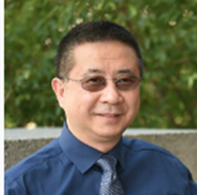
Richard Zhang received his B.S. and M.S. degrees in electrical engineering from Tsinghua University in 1989 and 1993, respectively, and his Ph.D. degree in electrical engineering from Virginia Tech in 1998. Dr. Zhang is the former Chief Technology Officer of GE’s Grid Integration Solutions a $1B business focusing on High Voltage DC Transmission and Flexible AC Transmission Systems (HVDC & FACTS). Prior to joining Virginia Tech in 2021, Dr. Zhang was an Executive leader holding various technology and business leadership positions during his 22 years of career with GE in various GE organizations, such as GE Global Research Center, GE Oil & Gas, GE Power Conversion, GE Renewables, and GE Energy Connection.
During 1998-2008, Dr. Zhang led power electronics research at GE Global Research Center serving all GE industrial businesses, including GE Oil & Gas, GE Aviation, GE Renewables, GE Power, GE Healthcare, GE Transportation, GE Lighting, GE Appliance, and GE Industrial Systems, as well as working with government agencies, such as DARPA (Defense Advanced Research Projects Agency), ONR (Office of Naval Research), and DOE (Department Energy), to advance the frontier of power electronics technologies. From 2008 to 2016, Dr. Zhang led power electronics, rotating machine, and automation technologies in GE Oil & Gas, GE Power Conversion, GE Renewables, GE Energy Connection, and GE Grid Integration Solutions, based in France, China, and the UK. He led diverse global teams with more than 600 people that span 22 sites in 9 different countries (US, Canada, UK, France, Germany, Finland, China, India, Brazil). Most recently, the advanced HVDC valve and HVDC control technology that Dr. Zhang led resulted in GE winning the 1.4 GW HVDC project in the North Sea in the UK – the world’s largest and longest distance offshore HVDC project for offshore wind farm tie-back. Richard served as Chairman of Industrial Advisory Board for CPES at Virginia Tech; served as Chairman, Board of Directors for Powerex – a power semiconductor and packaging company in the US; served as a steering committee member for SuperGrid Institute SAS in France; and served as an AdCom member for IEEE Power Electronics Society. Dr. Zhang has 47 journal and conference publications and invited talks, including 4 IEEE Transaction Award Papers. Dr. Zhang has over 105 global patents granted or pending in 42 patent families. Dr. Zhang is a Fellow of IEEE for his technical leadership in the development of high-power electronics.

Yuhao Zhang received the B.S. degree from Peking University, Beijing, China, in 2011, and the M. S. and Ph. D. degrees in electrical engineering from Massachusetts Institute of Technology (MIT), Cambridge, MA, USA, in 2013 and 2017, respectively. From 2017 to 2018, he was a Postdoctoral Associate with MIT. Since 2018, he has been an Assistant Professor with the Center for Power Electronics Systems, the Bradley Department of Electrical and Computer Engineering, Virginia Tech., Blacksburg, VA, USA.
He has authored or coauthored more than 100 journal articles and conference proceedings and is an inventor of 5 granted U. S. patents. His research interests include power semiconductor devices, (ultra-)wide-bandgap semiconductor materials, power electronics applications, and machine learning assisted co-design. Dr. Zhang is the recipient of the 2017 MIT Microsystems Technologies Laboratory Doctoral Dissertation Seminar Award, 2019 IEEE George Smith Award, 2021 National Science Foundation CAREER Award, as well as 2021 Outstanding Assistant Professor Award and 2022 Faculty Fellow Award of Virginia Tech Engineering.